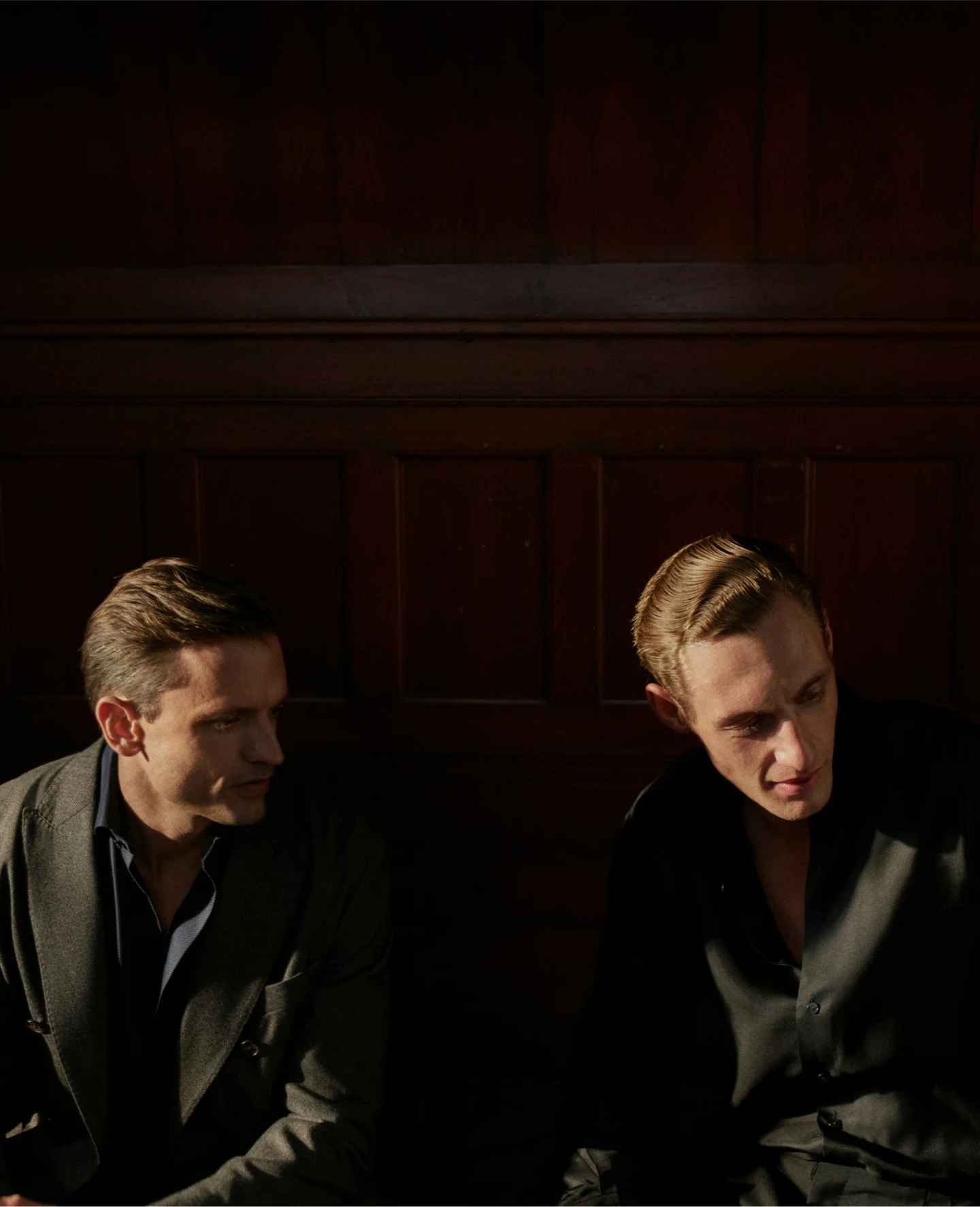
The Black Edit: The Case for Black After Dark
Guides
By: Eton • 4 minThe new formal is relaxed, tonal and black. Shifts in texture give the look its depth.
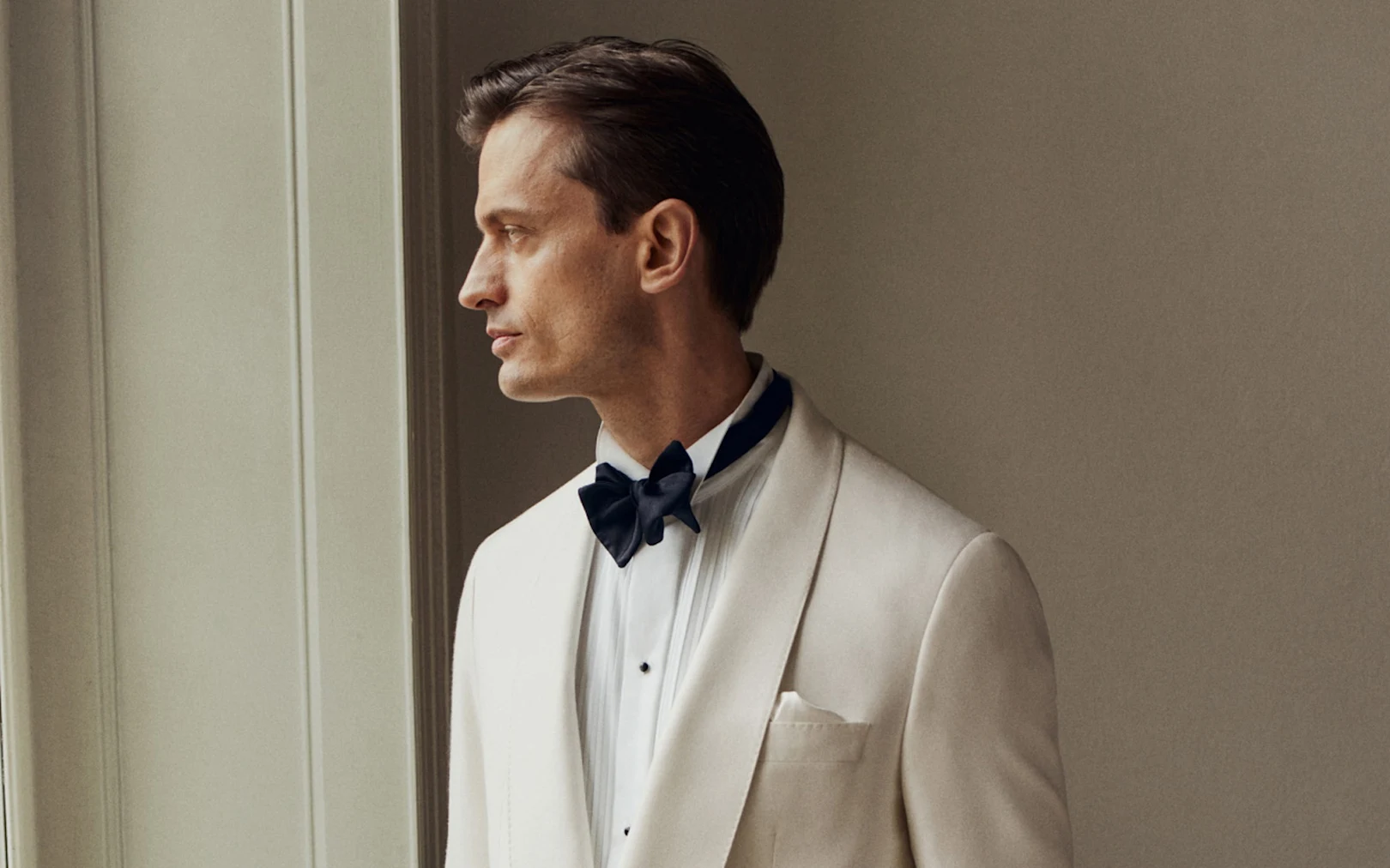
For most of the last century, evening dress came with a quiet rule: the jacket could be black, but the shirt never was. The evening shirt was white, crisp and strchesd, and black was left to the tailoring around it. Even the jacket had its rivals. In the 1920s, the Duke of Windsor made the case for midnight blue, which under artificial light read blacker that black itself.
That rule had its day. Worn tonally, with texture doing the work, black has become the most modern way to answer an invitation. Not a uniform, not a ostume, just a man who got dressed with intent and didn’t feel the need to announce it.
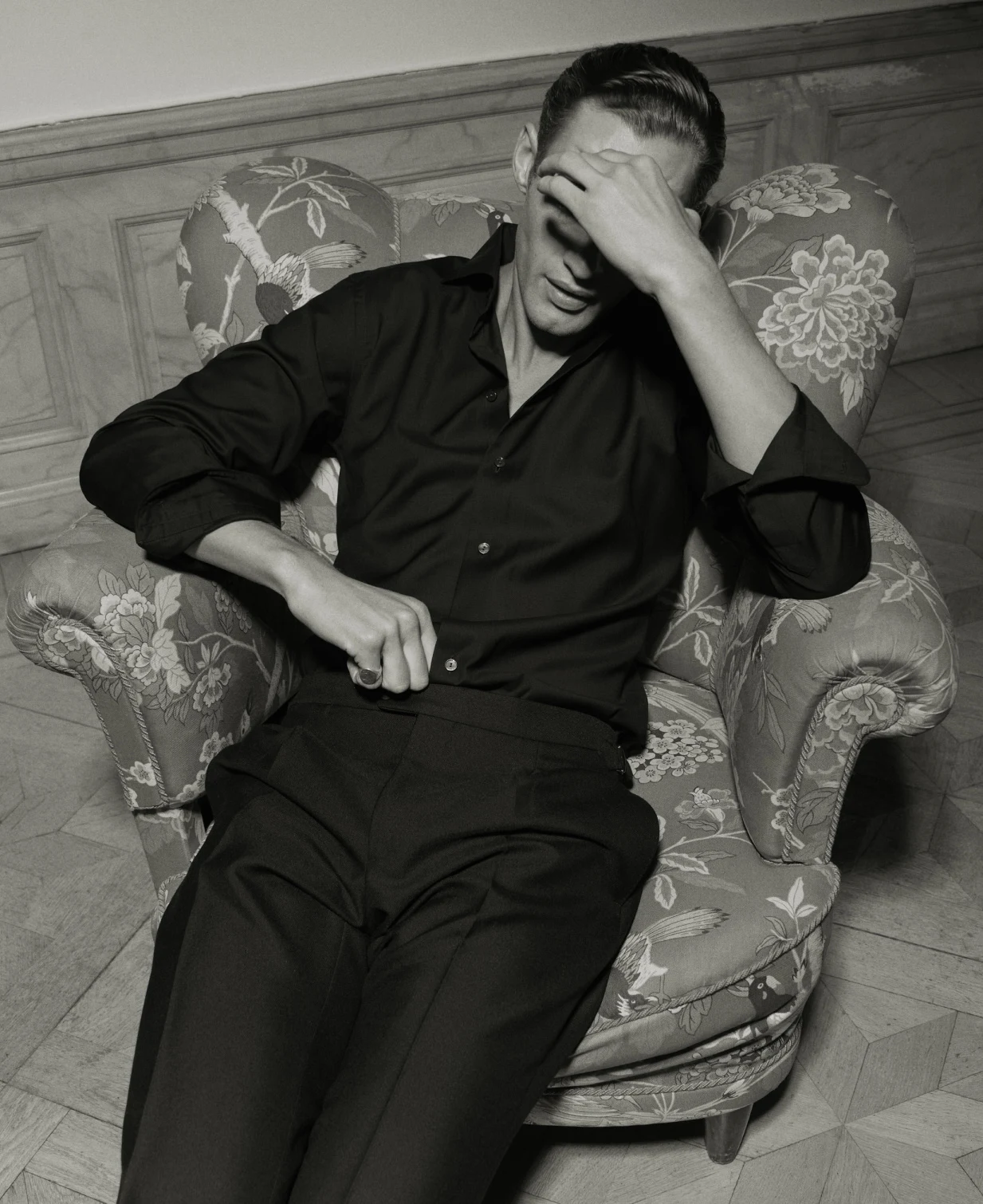
Why black, why now
Dressing up has come back in a changed form. Men are saying yes to the invitation and saying no to stiffness. The dinner, the party, the hang, the long table that runs past midnight: each asks for effort, but none asked for ceremony.
Black bridges that gap. It’s formal without being formal wear. It looks considered at a candlelit dinner and entirely at ease at the bar afterwards. It removes one decision, colour, so the attention goes to the ones that matter: fit, fabric and the way it all moves and flows together.
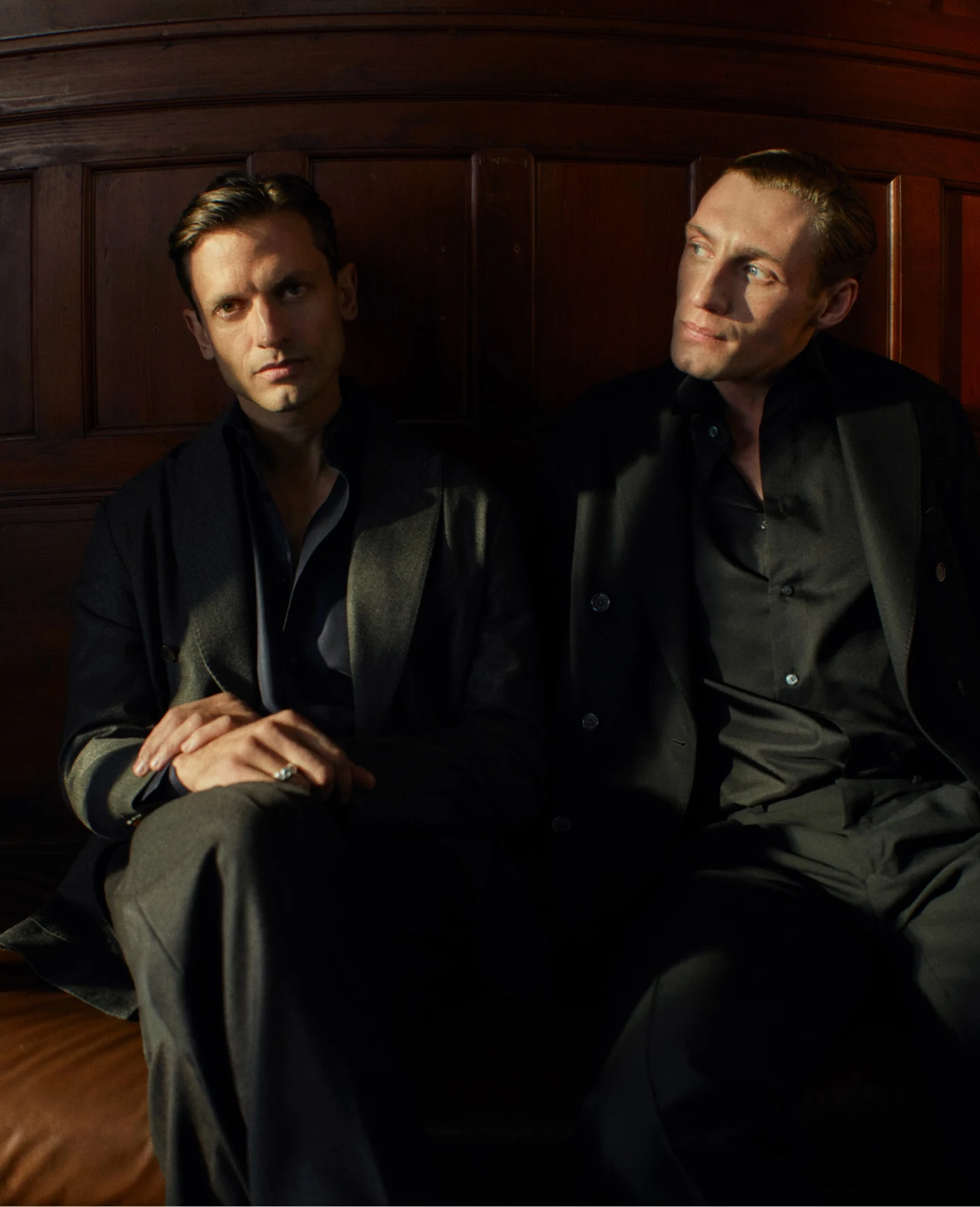
Just ask a Swede
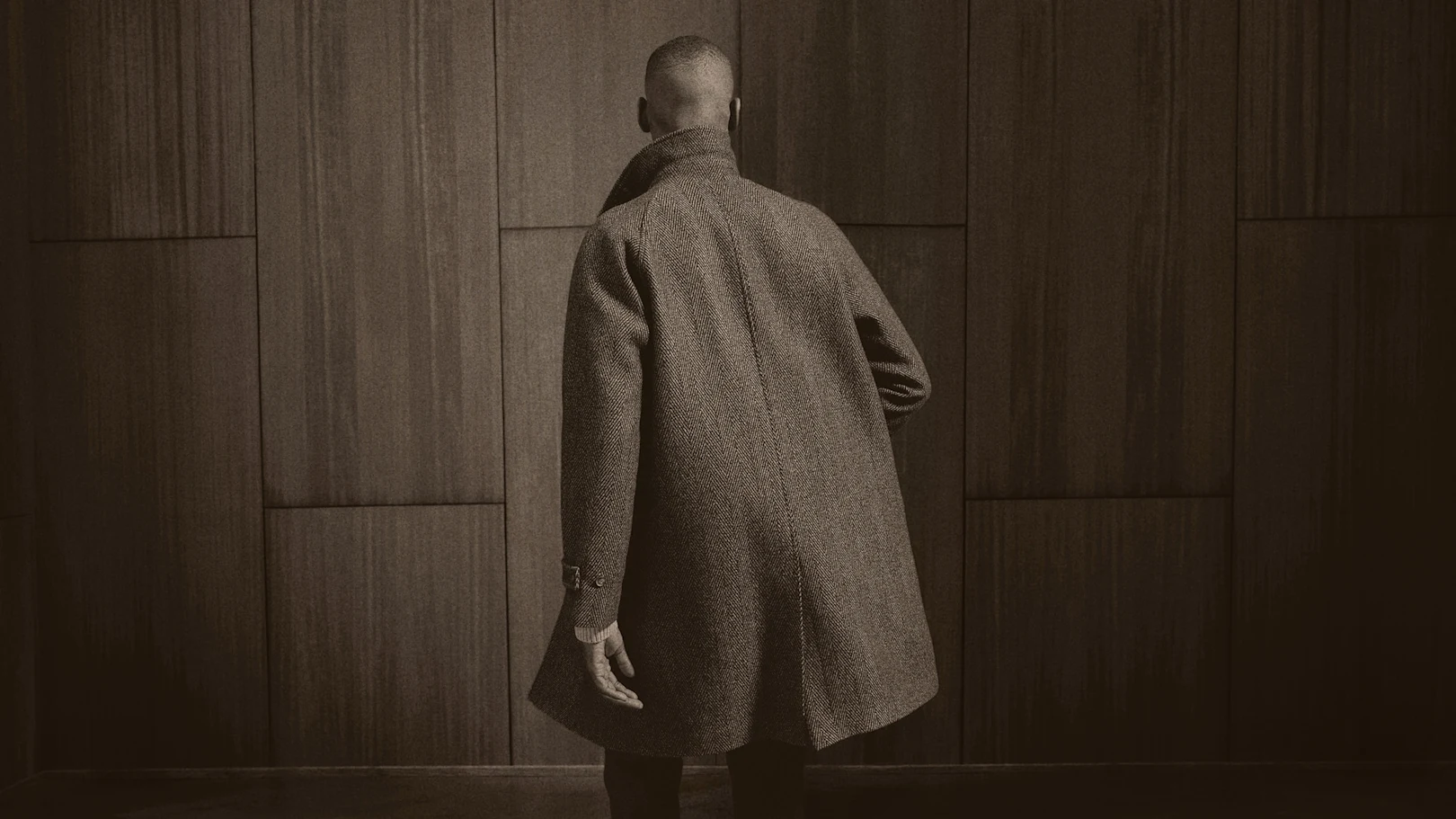
And then there is the part that every Swede already knows. Spend time in Stockholm on any given evening in December and you will see it: black coats, black knits, black shirts, black boots, one after the other. It’s as if there’s some kind of IYKYK inside joke.
So why? The first easy answer is Jantelagen, The Law of Jante. The term comes from a 1933 novel by Aksel Sandemose, set in a fictional small town whose unwritten rules boil down to one cardinal rule: don’t think you’re better than anyone else. Scandinavians still use it as shorthand for a culture that distrusts showing off. Seen that way, black is the perfect Jante color. It doesn’t shout and it doesn’t compete. It lets you dress well without looking like you tried to stand out.
But that’s only the half of it. Black in Stockholm is not timid. It’s confident. When there is no color to hide behind, everything else is on show: the cut of the shoulder, the drape of the cloth, how well a collar sits. And you. Restraint becomes a kind of signal to those who notice. That is where the allure lives. Black doesn’t ask for attention, which is exactly why it gets it.
Is it Jantelagen? Is it sexy. It’s both. Modesty on the surface, precision underneath. That tension is the most Swedish thing about it, and the reason it works so well after dark.
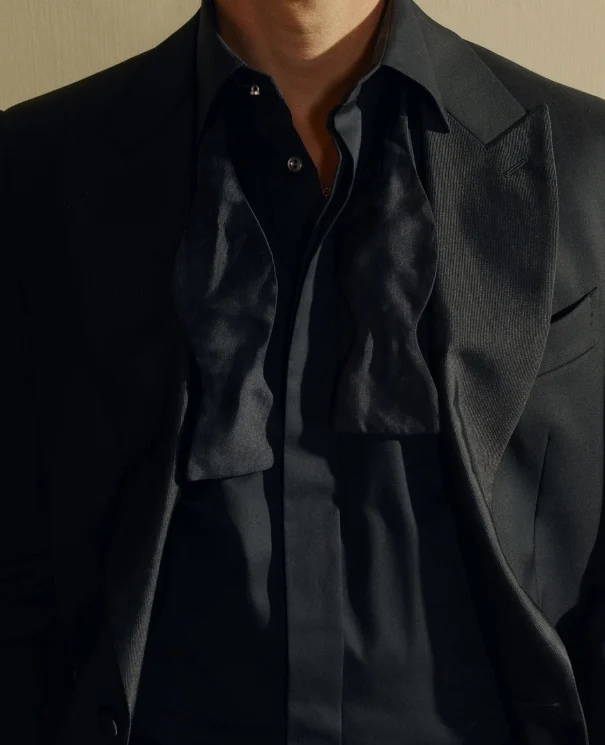
The rule: texture over color
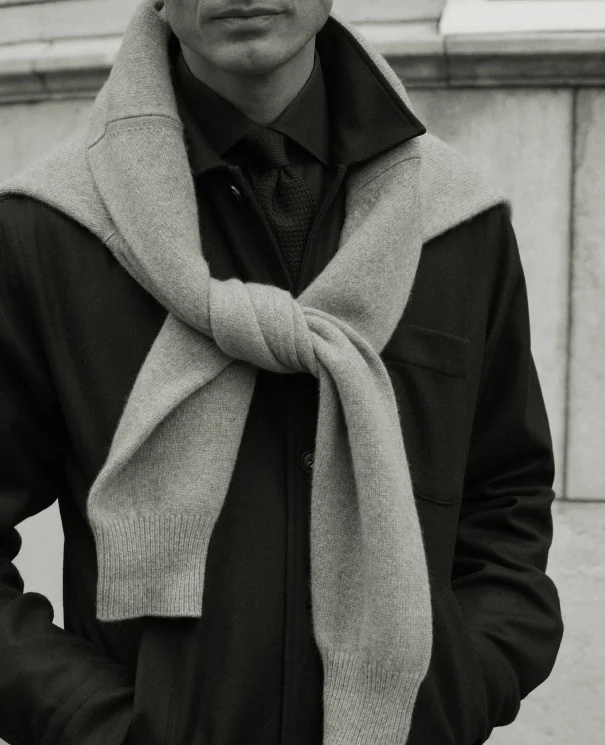
Tonal black usually only works when the surfaces change. Put three identical flat blacks together and the eye has nowhere to land. The outfit collapses into a silhouette. Vary the texture, and every piece catches the light in its own way. The black stays black, but it gains depth, shadow and movement. This is where the shirt matters most, because it sits closest to the face and light. Each fabric in The Black Edit answers the question differently.
Silk has a natural luster. It reflects light softly and gives the darkest look a quiet glow.
Superfine merino is matte and fluid. It absorbs light, drapes close to the body and feels as easy as a light knit.
Twill carries a diagonal weave you notice up close. It gives structure, a subtle luster and a kind of rhythm to the surface
Three ways to wear it
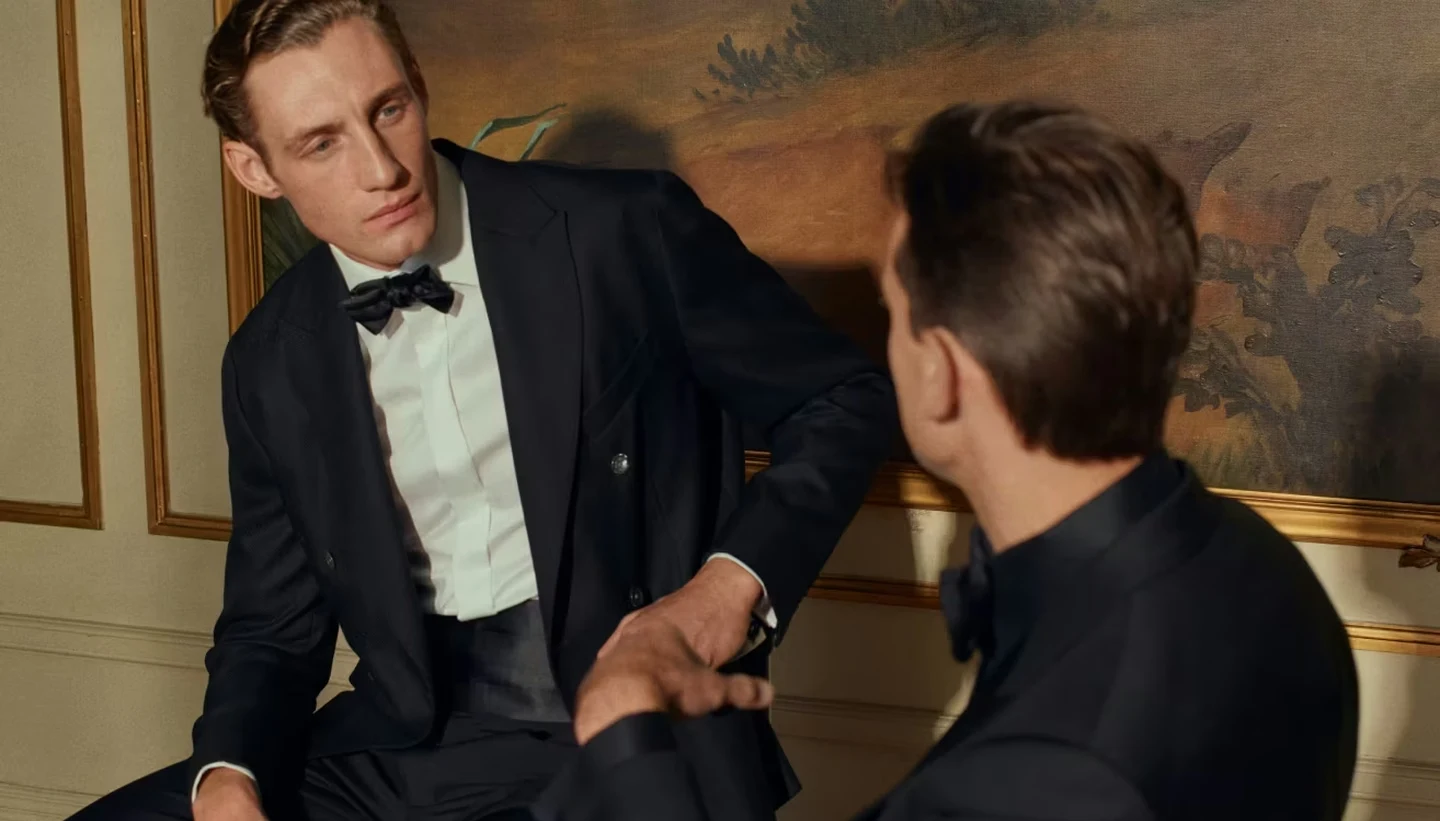
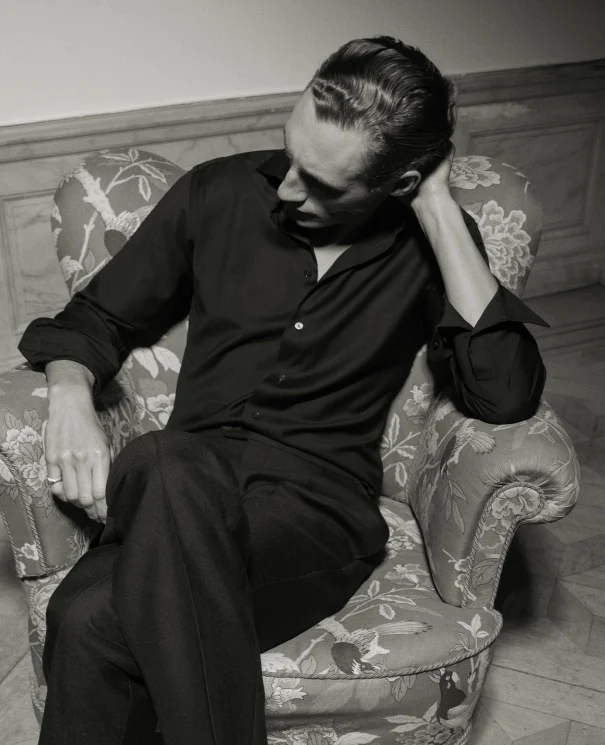
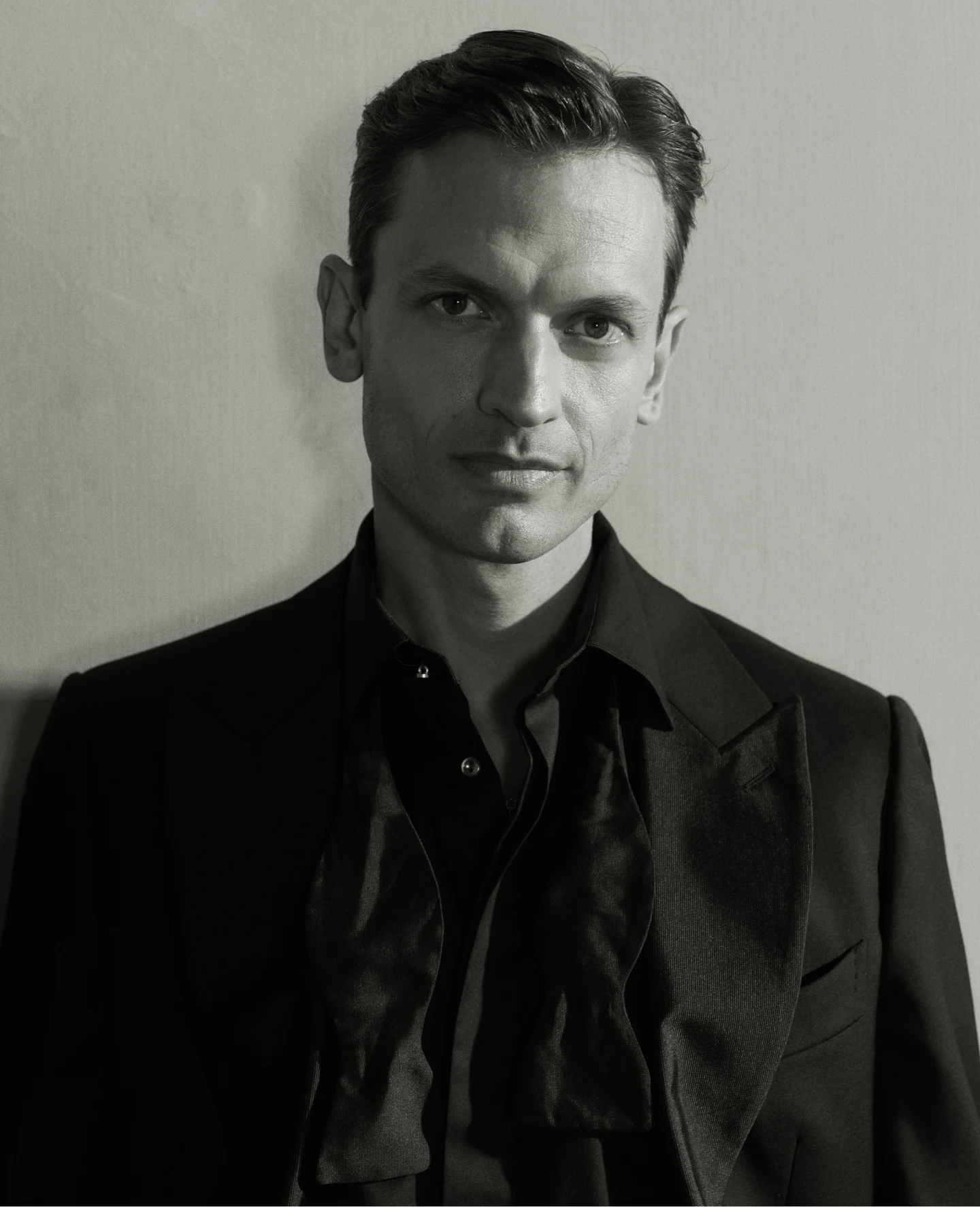
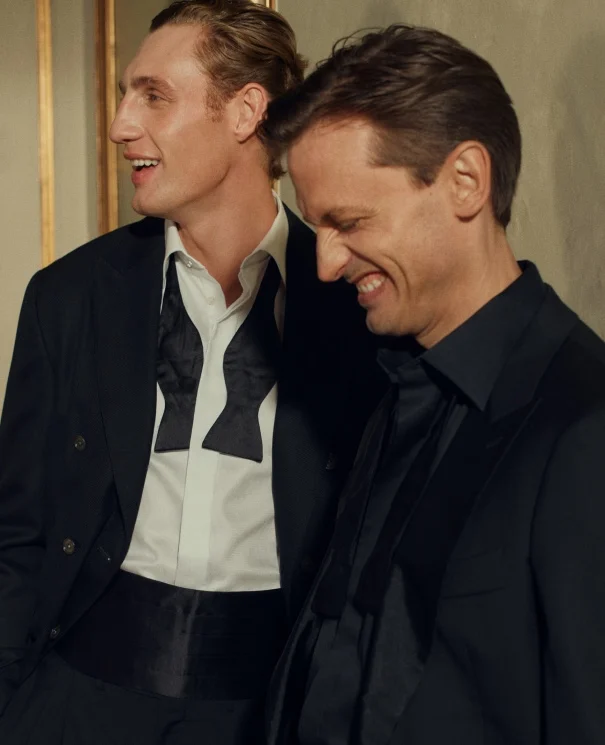
Black on black, with tailoring. The full statement. A black shirt under a black suit or jacket reads as one clean line from collar to shoe. It works because nothing interrupts it, so let the fabrics provide the contrast: a lustrous shirt under a matte wool jacket, or vice versa.
The black shirt on its own. For when the evening relaxes. Sleeves turned once, collar open, nothing else needed. A good black shirt carries the room by itself, because the fabric and the fit are all there is to see.
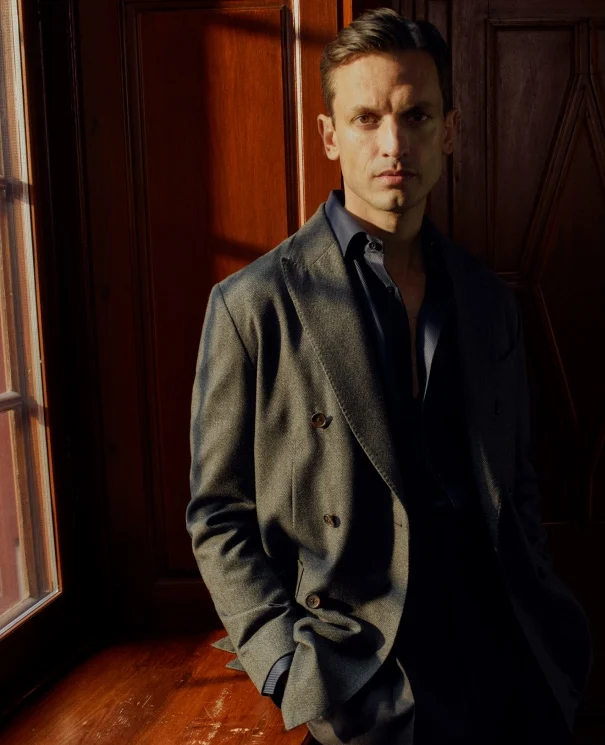
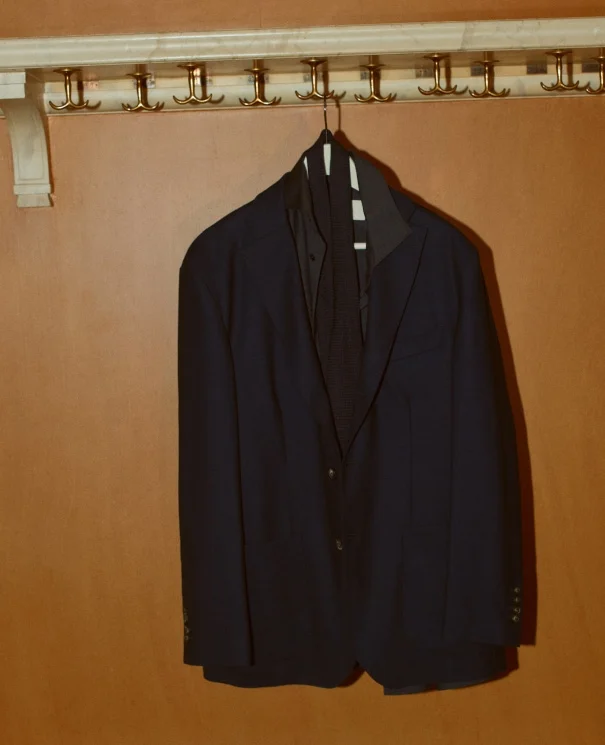
A black shirt under a black or almost black suit. The subtle one. Under charcoal, deep navy or a dark brown, black adds depth without stark contrast. It feels sharper than a white shirt and more relaxed than a tie, which makes it right for almost any invitation.
Three twills, one standard
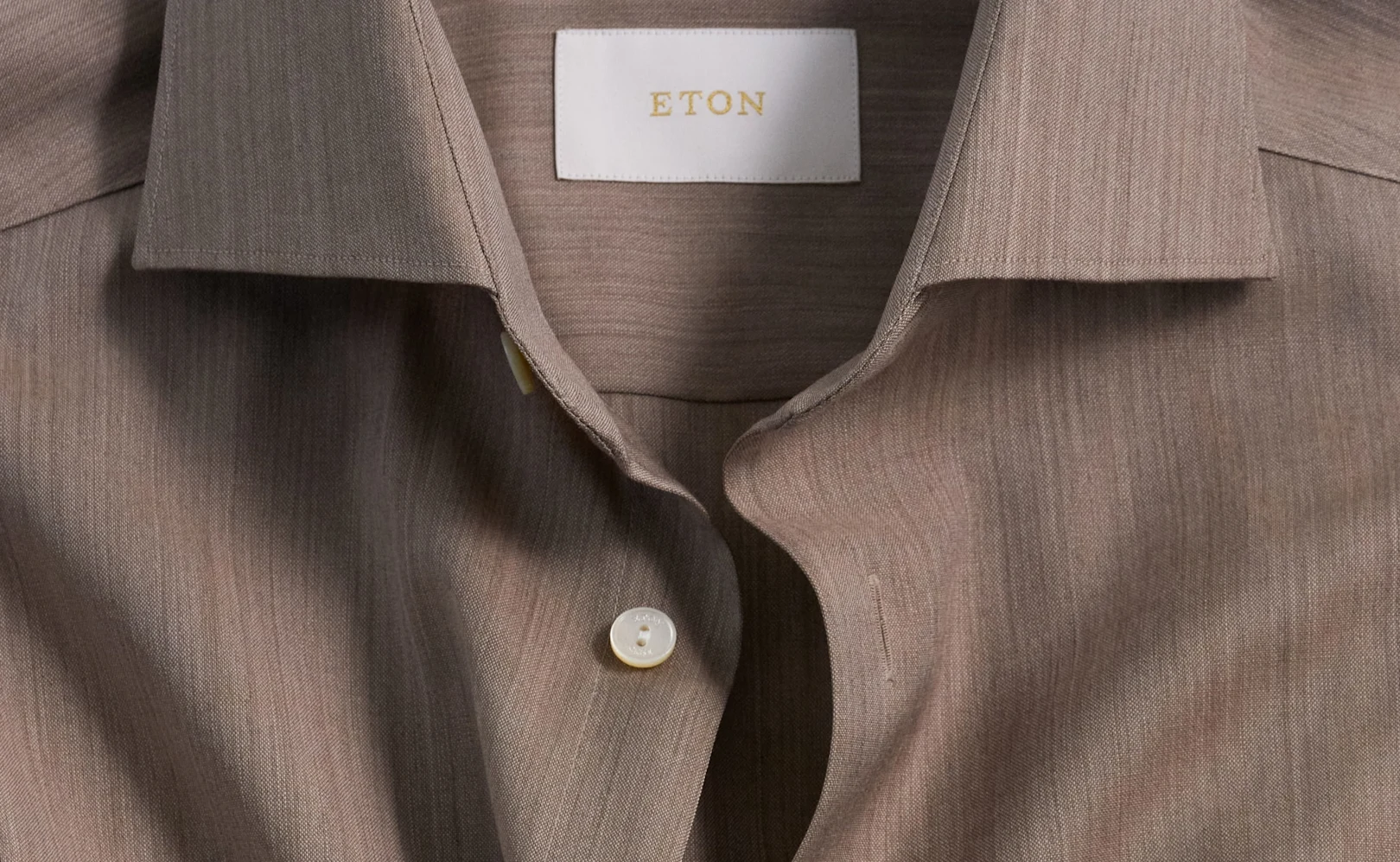
Black is actually the least forgiving color a shirtmaker can work with. Any flaw in the yarn, uneven dye or loose stitch shows. That is why our black shirts start where all our shirts start: with fabrics from some of the finest weavers in the world, and the patience to get it right.
King Twill has a pronounced, generous, and dense hand. In black, the diagonal weave throws a fine shadow that gives the shirt a real presence.
Textured Twill brings a more tactile surface. Up close, it has a subtle irregularity that makes it the natural partner for smoother tailoring.
Signature Twill is our most iconic fabric: smooth, crisp and refined, with a soft luster that suits a dinner jacket as well as it suits a long evening without one.
Three twills, three ways of holding the light, all made to the same standard of fabric proportion and detail.
The fabric is only the beginning, though. How the shirt is cut and finished decides how the shirt will look, and that comes down to nearly a century of shirtmaking. We’d say we’re the best at it, but we’re Swedish, so we’ll let the shirt say it for us.